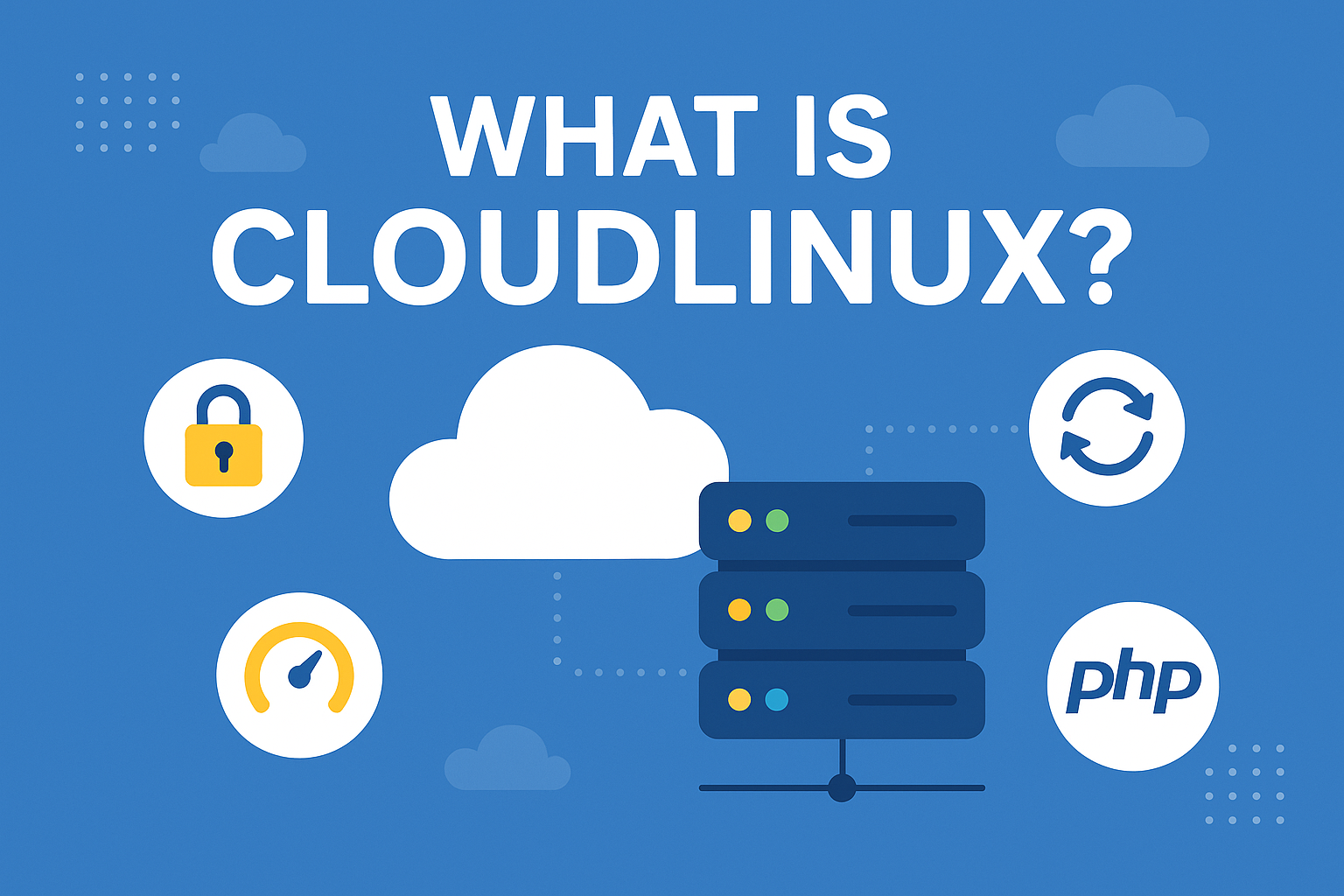
If you’ve ever hosted a website, you probably heard terms like shared hosting, server resources, or isolation. These can sound a bit too technical. But don’t worry—today, let’s simplify one of the most important technologies that makes modern hosting faster, safer, and more reliable: CloudLinux.
🌐 What is CloudLinux?
Think of a shared hosting server like an apartment building. Many websites (tenants) live in the same place and share the same resources (water, electricity, internet).
The problem? If one tenant throws a huge party and uses too much electricity, everyone else might face blackouts.
This is where CloudLinux comes in—it makes sure every “tenant” (website) gets its own dedicated share of resources. That way, even if one site misbehaves, others keep running smoothly.
🔑 Key Features of CloudLinux (Simplified)
- Resource Isolation
Each website gets its own limits for CPU, RAM, and connections. No more “noisy neighbor” issues.
- Better Security
CloudLinux uses a system called CageFS—it puts each website in its own “cage.” Hackers can’t jump from one site to another.
- Stability & Uptime
Since one site can’t eat all the server resources, your website stays up and fast even during traffic spikes.
- Multiple PHP Versions
Some websites need PHP 7.4, others want PHP 8.x. CloudLinux lets each site choose its own PHP version without affecting others.
- Performance Boost
Websites hosted on CloudLinux servers usually load faster and crash less often—perfect for businesses that rely on uptime.
💡 Why Should You Care?
- If you run a business website, CloudLinux protects you from downtime caused by other users.
- If you’re a developer, you’ll love the flexibility of choosing different PHP versions.
- If you’re just starting, CloudLinux makes sure your site is safe, stable, and ready to grow.
🔗 Learn More
Want to dive deeper into CloudLinux and its technical features? Check the official website here: CloudLinux Official Site
🚀 Final Thoughts
At the end of the day, you don’t need to be a server expert to benefit from CloudLinux. Just know that if your hosting provider uses it, you’re in good hands. Your website gets better speed, stronger security, and more stability—all without you lifting a finger.
So next time you see “Powered by CloudLinux” in a hosting plan—smile, because that’s a good sign. ✅